Adventuresum
Adventuresum is a one-stop shop for discovering and planning outdoor adventures — camping, hiking, and climbing trails. Engagement was low and users rarely made it past the homepage. I led the research to find out why.
A platform people visited once and left
The data showed users staying on the homepage and going no further. The founders wanted to increase engagement, drive traffic deeper into the platform, and understand their own market positioning, offering, and prospective audience — none of which was clear yet.
In the first kickoff meeting with the stakeholders, project manager, and developer, I asked the questions that keep research honest: What do you want to learn? What problems do we already know about? What counts as high priority? And what will you do with the results?
Mapping the market before recruiting a single participant
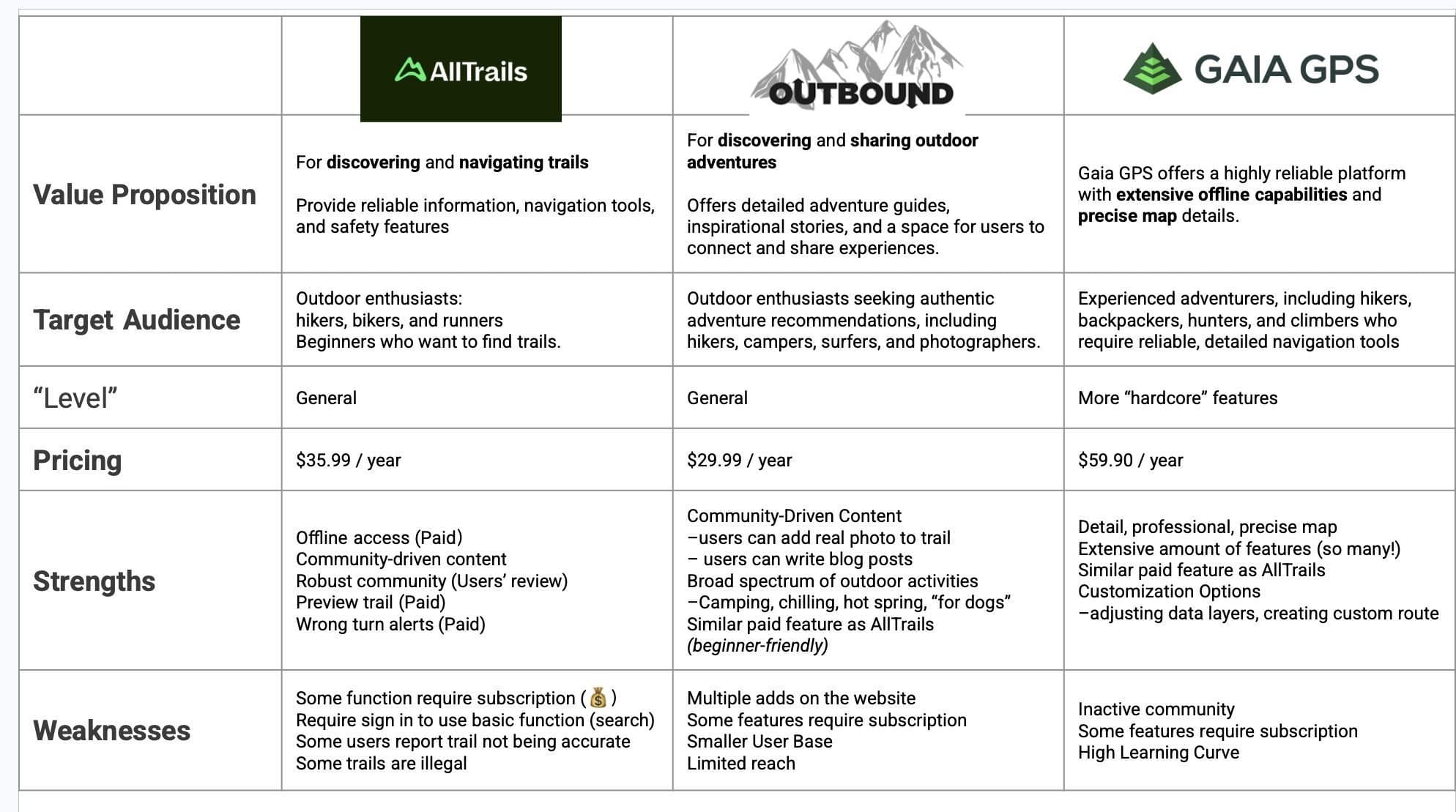
I began with a competitive analysis of AllTrails, Outbound, and Gaia GPS — identifying market gaps and what users value and dislike in the platforms they already trust. That picture guided the discussion guide and the focus of the testing to come.
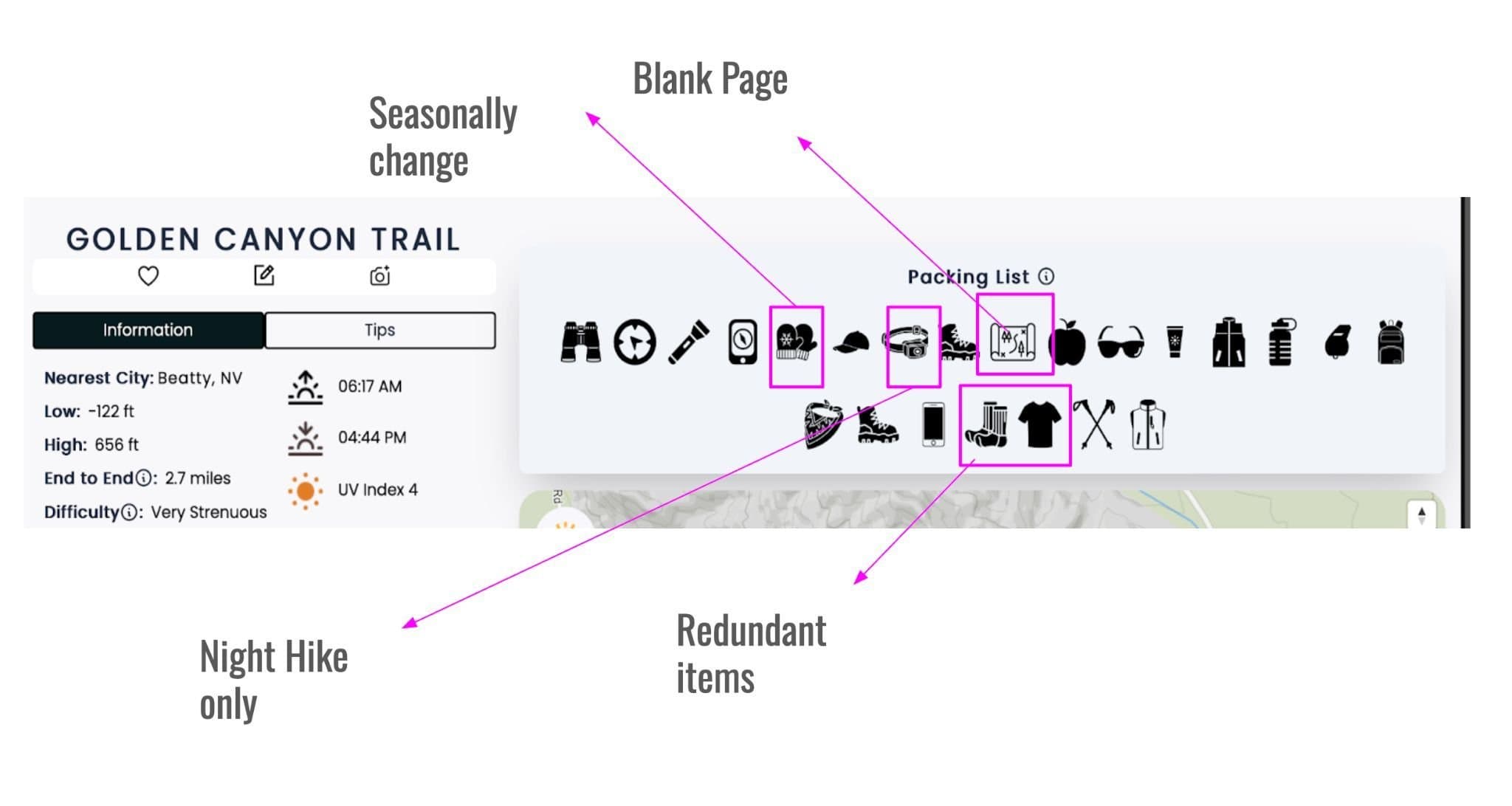
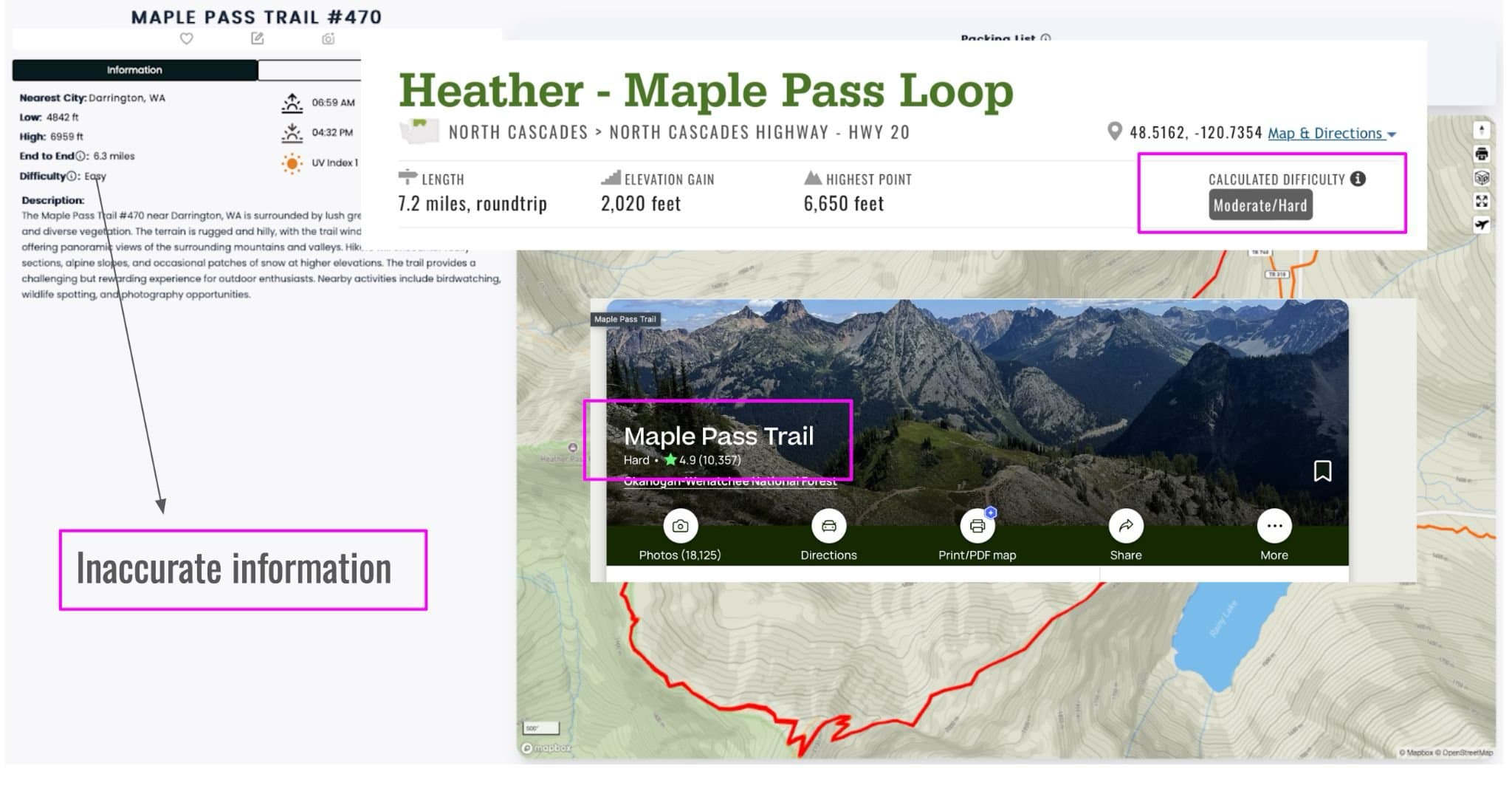
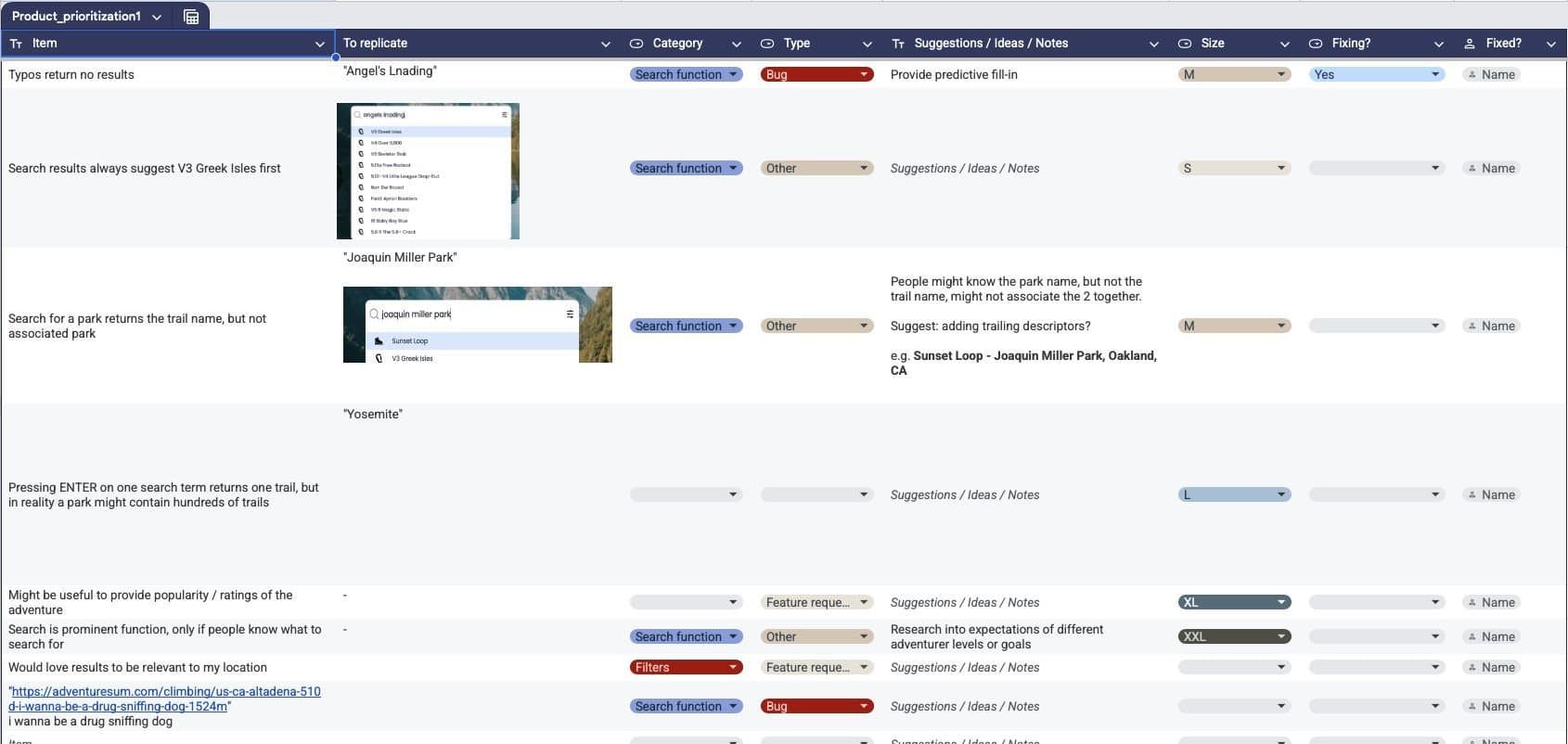
In parallel, a heuristic review of the site surfaced the obvious usability issues: a packing list with redundant and seasonal items, trail pages with inaccurate information. Everything went into a bug tracker, and the developers fixed the critical bugs — like search inaccuracy — before testing began, so sessions wouldn’t be spent rediscovering known friction.
Alignment, pilot, recruiting with zero budget
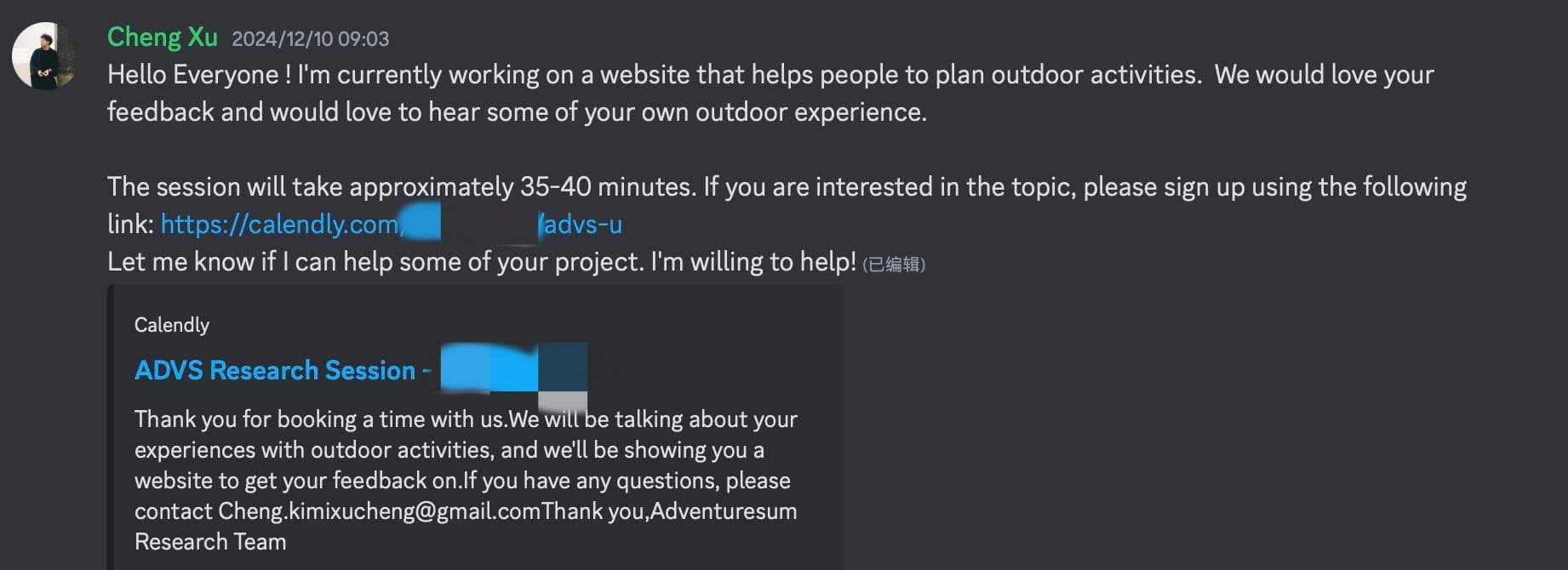
A second alignment meeting turned business goals into research goals: explore how people plan outdoor activities and what they need from a planning tool, and evaluate whether they could understand and use the platform’s key features.
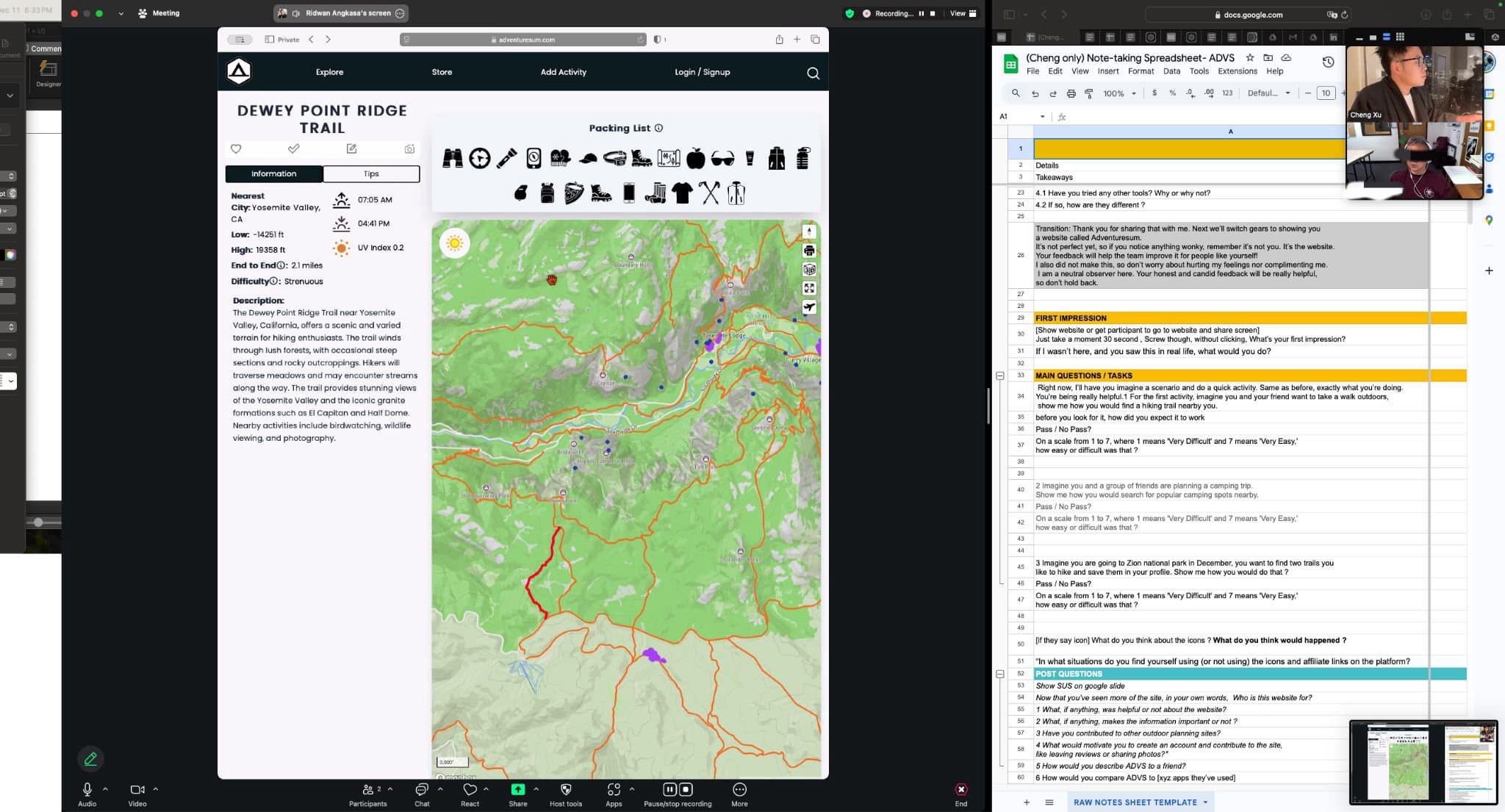
I chose 1:1 moderated usability tests paired with interviews — the interview to understand planning habits and shape user archetypes, the moderated tasks to watch where people struggled and what they liked.
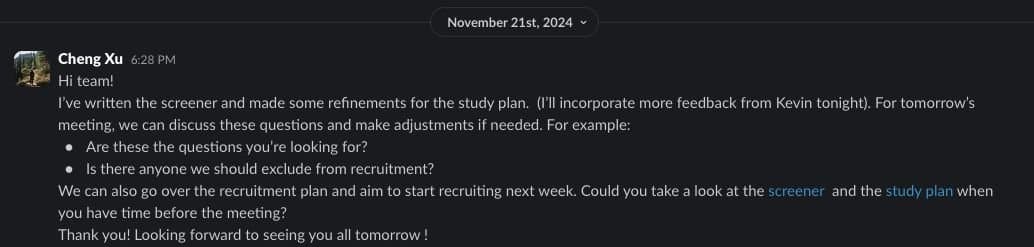
I wanted at least ten participants across hiking, camping, and climbing. With no recruiting budget or support, I recruited through a non-profit platform, personal circles, and snowballing — and got seven, aged 25 to 60, screened for outdoor experience with a custom screener.
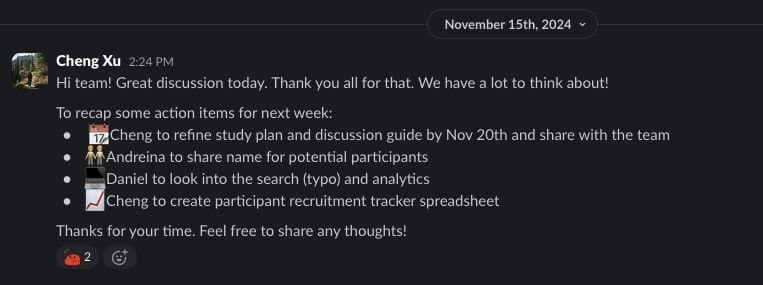
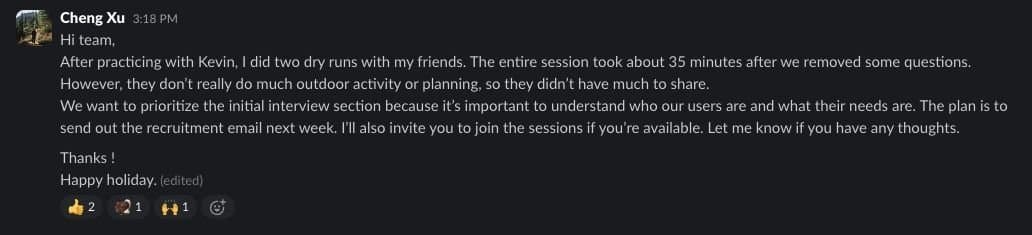
Pilot runs trimmed the session to about thirty-five minutes and moved the interview up front — understanding who our users are mattered more than finishing every task. The team got an update in Slack at every step.
Thematic Analysis
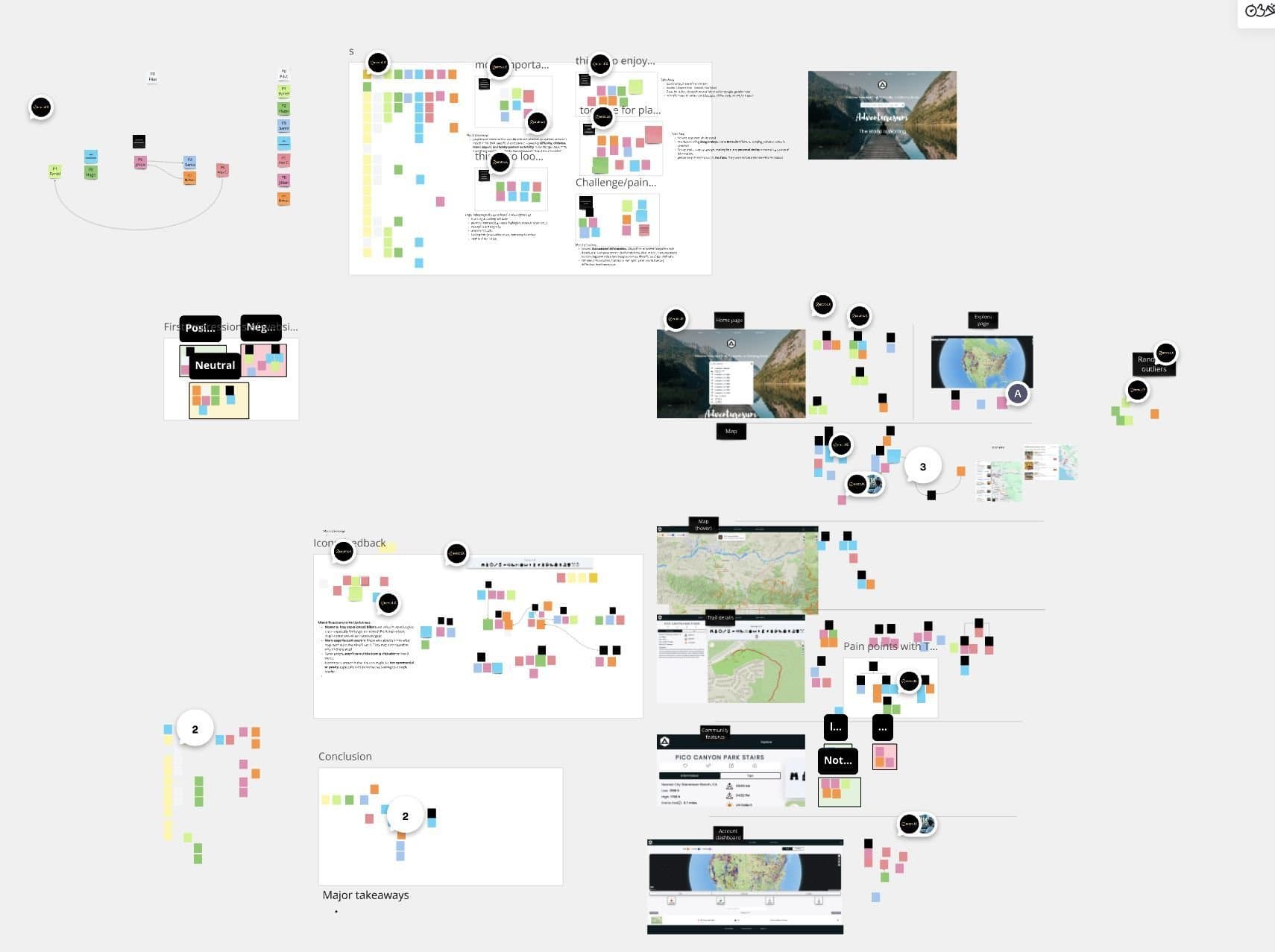
I ran a thematic analysis in Miro, clustering observations from every session until the patterns held: broken trust, habits anchored to competitors, and beloved features nobody could find.
Trust was the product problem
Participants didn’t trust the website. Bugs and inaccurate information — a hard trail marked easy, search results that dissolved as you typed — nudged them back to the competing platforms they already knew.
Search was the sharpest edge, because search is the first action users take. It returned pages of near-duplicates, and typing “Death Valley” with “California” made the results disappear entirely.
But the platform’s unique features — the 3D trail visualization and the packing list — had strong potential. Participants loved them; they were just invisible. Neither the project manager nor I had known one of them existed. In a crowded market, these were the features that could set Adventuresum apart.
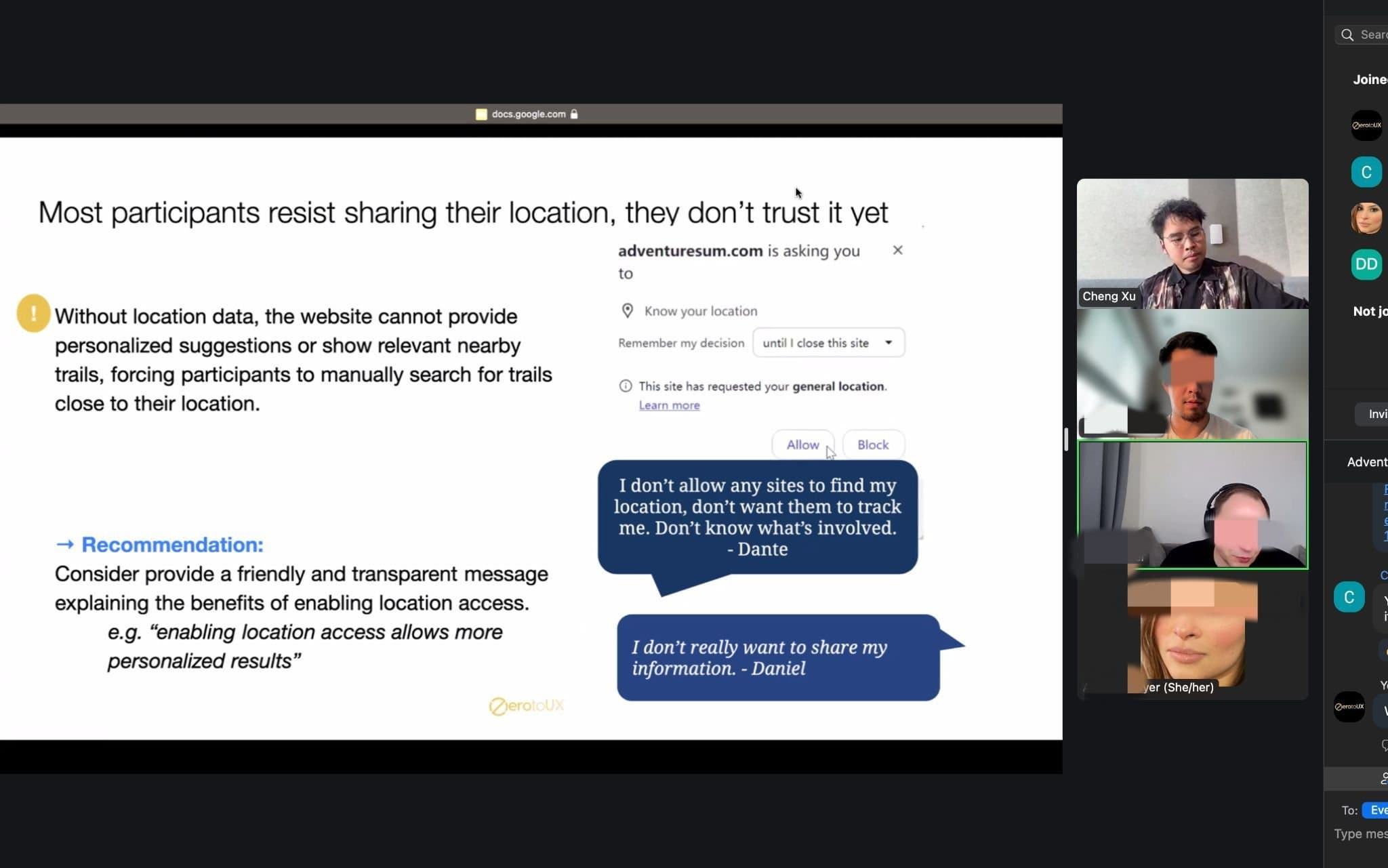
“I don’t allow any sites to find my location, don’t want them to track me. Don’t know what’s involved.” — Dante, participant
What changed
The research changed how the stakeholders saw their own product. Trust moved to the center of the roadmap: they understood that the lack of it was the barrier to adoption, and that improving information accuracy and reducing friction had to come first. First impressions count.
The overlooked features went from invisible to strategic. The company can now promote and refine the 3D trail visualization and the packing list as what differentiates the product in the market.
And the Product Hunt launch the team had been weighing was deferred — the research showed the MVP wasn’t ready, and gave the team a defined roadmap to get it there.
What I’d do differently
Seven participants were enough to find the big problems, but not enough to build robust archetypes. With more time or any budget, I would have recruited a larger pool — and more campers and climbers in particular, since most of my insight came from hikers, and their needs are not the same.